Your selection
Research, Patient care / 07.07.2023
New triple therapy alleviates cystic fibrosis
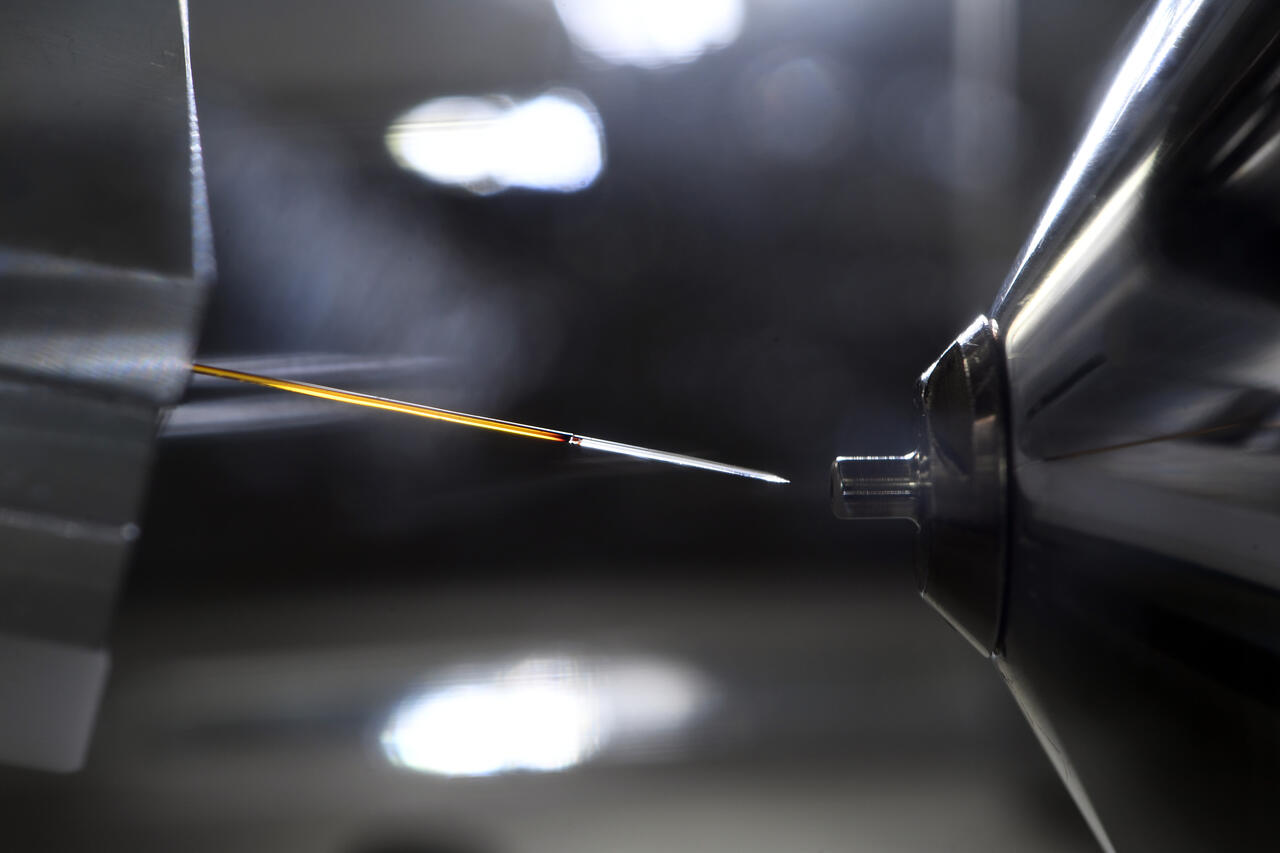
The mucus in the airways is not as sticky, inflammation in the lungs significantly reduced: the positive effects of triple combination therapy in patients with cystic fibrosis are supported by researchers from Charité and the Max Delbrück Center in the “European Respiratory Journal”.
Two years ago, a research group headed by Charité – Universitätsmedizin Berlin showed that combination therapy involving three drugs – elexacaftor, tezacaftor, and ivacaftor – is effective in a large portion of patients with cystic fibrosis, a hereditary disease, meaning that the treatment noticeably improves both lung function and quality of life. Now, the team headed by Professor Marcus Mall, who has been the lead researcher in both studies, has investigated for the first time whether this form of treatment is also helpful in the long term, meaning over a period of 12 months or more. To examine this, the researchers took a closer look at the sputum, the secretions from patients’ respiratory tracts.
“In patients with cystic fibrosis, the mucus in the airways is very sticky because it doesn’t contain enough water and the mucins, the molecules that form mucus, adhere too much due to their chemical properties. This results in thick, sticky mucus, which clogs the airways, making it harder for patients to breathe and leading to chronic bacterial infection and inflammation of the lungs,” explains Mall, Director of the Department of Pediatric Respiratory Medicine, Immunology and Critical Care Medicine and the Christiane Herzog Cystic Fibrosis Center at Charité.
In the current study in the “European Respiratory Journal“, the researchers show that a combination of elexacaftor, tezacaftor, and ivacaftor results in less viscous respiratory secretions and decreasing inflammation and bacterial infection in the lungs of cystic fibrosis patients. “What’s more, the effects lasted over the entire one-year study period. This is really important because previous medications caused a rebound in the bacterial load in the airways,” explains Dr. Simon Gräber, who also works in the Department of Pediatric Respiratory Medicine, Immunology and Critical Care Medicine at Charité and was one of the co-leaders of the study. 79 adolescents and adults with cystic fibrosis and chronic lung disease participated in the trial.
No cure yet
“This is a major step forward in treating cystic fibrosis,” Mall says. “At the same time, it would be premature to say that patients have been normalized, let alone cured. Chronic lung changes arising over many years of living with the disease cannot be reversed, unfortunately.” This means patients with advanced lung disease will still need to rely on established treatments involving inhaling mucus-thinning medications, taking antibiotics, and physical therapy.
“We plan to forge ahead with our research on how to make treatments that address cystic fibrosis via the molecular defects that cause the disease – like the triple medication combination studied here – even more effective. This includes starting treatment in early childhood with the goal of preventing chronic lung changes wherever possible,” Mall notes. Aside from that, this therapy is not available to about ten percent of the patients right now due to their genetic conditions.
New proteomic analyses are assisting in the search for effective treatment methods for all patients. In collaboration with Kerstin Fentker, a doctoral student at the Proteomics Platform of the Max Delbrück Center and the Berlin Institute of Health at Charité (BIH) and one of the co-first authors have further developed these analyses. They can now track molecular processes at the protein level in patient sputum over time. Dr. Philipp Mertins, co-senior author and head of the Proteomics Platform, adds, "There is great potential for new proteomics methods to identify disease processes and potential biomarkers not only in conventional liquid biopsies such as blood samples but also in organ-specific sputum samples from the lungs."
The researchers are also working to advance their understanding of mucus defects in cystic fibrosis and develop new mucolytics, drugs that thin and loosen the mucus. This research could also benefit patients with common chronic inflammatory lung diseases such as asthma and COPD.
Text: Charité
Source: Text: Charité
New triple therapy alleviates cystic fibrosis
Overview News
News Buch Berlin
Eckert & Ziegler: Strong FY 2025 with Positive Outlook
Eckert & Ziegler SE (ISIN DE0005659700, TecDAX) set a new record in fiscal year 2025 with sales of €312.0 million. Compared to the previous year, sales rose by approximately €16 million (+5%).
more ...Launch of the Einstein Center for Early Disease Interception
At the Einstein Center for Early Disease Interception, researchers from twelve Berlin institutions will be pooling their expertise to explore new approaches to prevention, long before symptoms appear,...
more ...Strengthen international cooperation in clinical trials
As part of the Australian Clinical Trials Initiative, ACTI, Australian companies and representatives of the Australien Government’s Trade and Invest Commission, Austrade, visited the Berlin-Buch Scien...
more ...Events Buch Berlin
04.04.2026, 16:00
Traditionelles Osterfeuer auf dem Stadtgut Berlin-Buch
in familiärer Atmosphäre - für das leibliche Wohl ist gesorgt
more ...05.04.2026, 11:00
Tierische Ostern im Schildi-Park
Mit Esel, Alpaka, Ziegen, Eierparcours, Eiertrudeln, Osterhasen, Stockbrot, Ständen uvm.
more ...11.04.2026, 10:00
Geführte Wanderung durch das Stadtgut und den Schlosspark in Buch
Manfred Pinkwart lädt ein
more ...