Experimental and Clinical Research Center (ECRC)
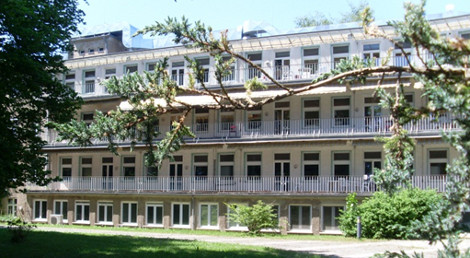
As a joint institution of the Charité – Universitätsmedizin Berlin and the Max Delbrück Center for Molecular Medicine in the Helmholtz Association, the Experimental and Clinical Research Center (ECRC) provides the scientific and technical infrastructure, expertise and resources for translational research, including clinical trials, according to competitive criteria. The ECRC provides access to highly advanced technologies, such as ultra high field magnetic resonance imaging, and has a cleanroom laboratory for the production of immunotherapeutic vaccines and a unique infrastructure for patient-centered research in the form of a clinical pharmacology unit in accordance with the American “clinical research center” model. Studies with outpatients can be carried out in specialized university outpatient clinics. If a clinical trial requires hospitalization of the trial participant for several days, this can be provided in the inpatient hospital sites of the Charité.
The aim is to transform findings from basic research into clinical practice to improve the diagnosis, prevention and treatment of the most prevalent diseases in our society (cardiovascular and metabolic diseases, cancer, neurological disorders). An important aspect of the ECRC strategy is to facilitate extensive collaboration and communication between basic scientists and clinical researchers, thus creating a common platform as the basis for successful cooperation.
Berlin Institute of Health (BIH)
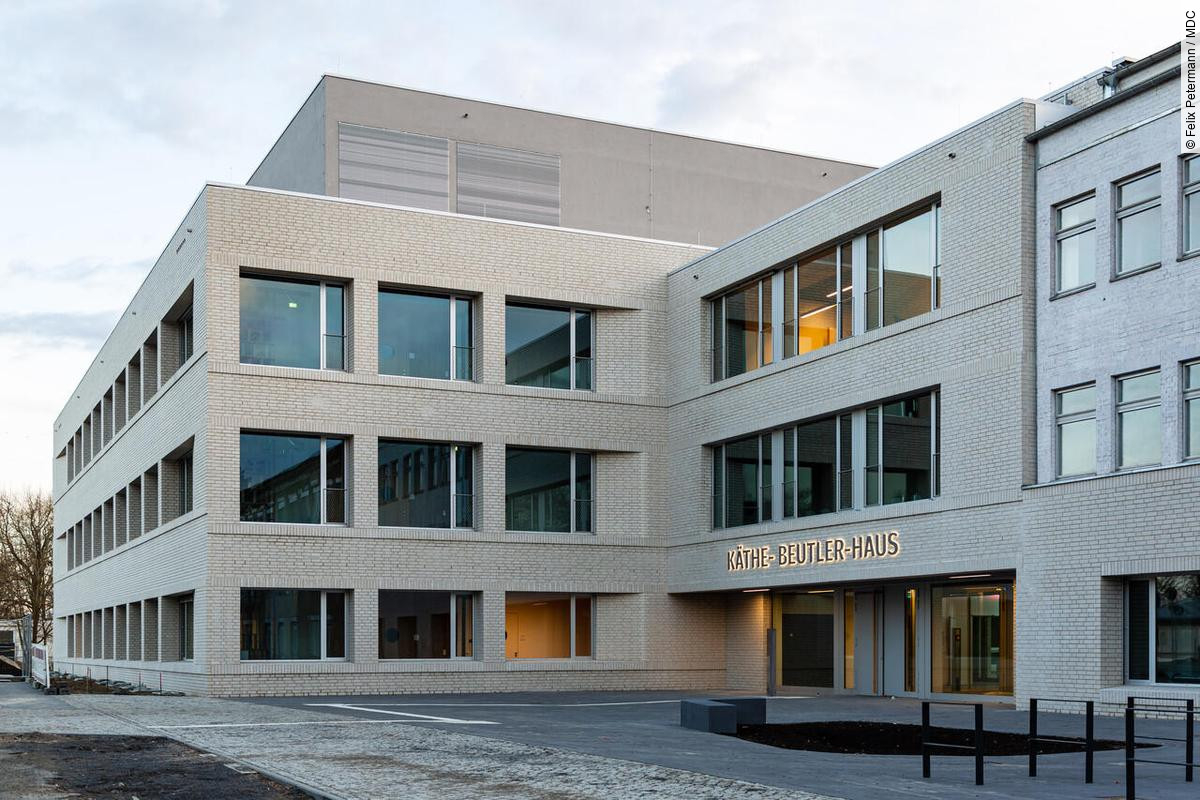
Translational research – the transfer of research results from bench to bedside – is also the mission of the Berlin Institute of Health (BIH). It focuses on the comprehensive approach of systems medicine and works closely together with the Max Delbrück Center. The Käthe-Beutler-Haus with laboratory and office space for scientific infrastructure and for biomedical and clinical research groups opened for the BIH at the Buch site in 2021. BIH, Charité and the Max Delbrück Center jointly use innovative technologies here and drive translational biomedical projects forward in order to develop new approaches for personalized medicine and novel therapies for chronic diseases.
News research
Stopping stomach cancer before it starts
A team headed by Michael Sigal’s lab has revealed how Helicobacter pylori reprograms the stomach lining at the cellular level, allowing cancer to develop. The findings, published “Nature Communicatio...
more ...How calcium channels in muscle cells open together
Using cryo-electron microscopy, the Kudryashev lab has revealed how muscle cell calcium channels open synchronously. The findings, published in “Nature Communications,” may explain a mechanism behind...
more ...Award for entrepreneurial spirit: Christian Hackenberger receives the UNIPRENEURS Prize
Prof. Dr. Christian Hackenberger of the Leibniz Forschungsinstitut für Molekulare Pharmakologie (FMP) at the Campus Berlin-Buch and Humboldt University of Berlin has been awarded the UNIPRENEURS Prize...
more ...Events Campus
15.10.2026, 17:00
Talk im Cube: Entrepreneurship Programs & Business Plan Development for Life Scientists
Join us for this edition of Talk in the Cube to explore - how life scientists can leverage entrepreneurship programs and - robust business plans that address market opportunities, regulatory requireme...
more ...20.10.2026, 18:00
Campuskino zeigt den Film "Louis Pasteur", US-amerikanische Filmbiografie, 1935
Der Freundeskreis des Max Delbrück Center lädt zum Kino auf dem Campus ein.
more ...04.11.2026, 16:00
Plastik im Kopf: Nanoplastik findet sich auch in unserem Gehirn. Welchen Einfluss hat das auf die Zellfunktionen unseres Zentralorgans?
Vorlesungsreihe: Neue Wege in der Biomedizin: Aktuelle Forschungsthemen vom Campus Berlin-Buch
more ...