Your selection
Research, Living, Patient care / 04.04.2025
In memory of Professor Peter M. Schlag
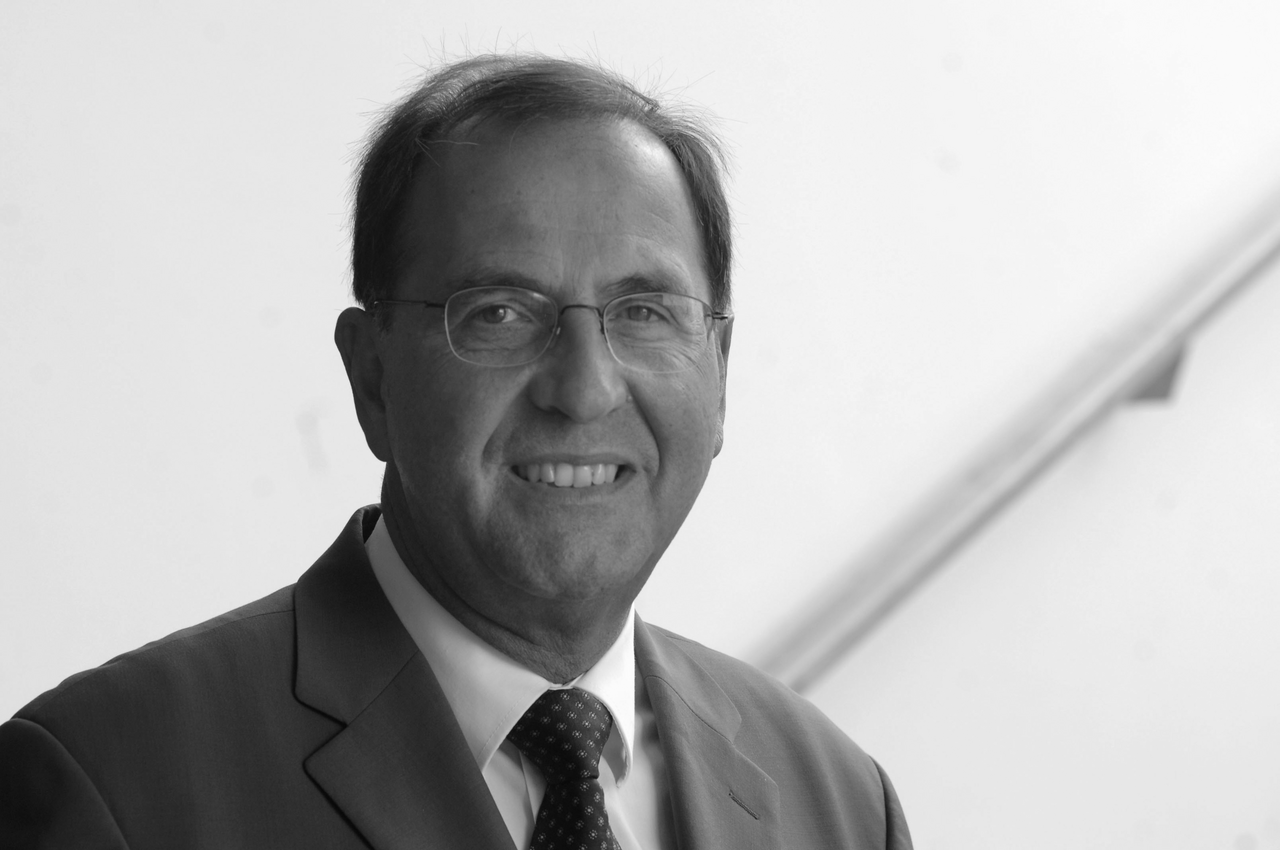
The Max Delbrück Center mourns the loss of Professor Peter M. Schlag (1948–2025). He was a pioneer of cancer research and a passionate physician. Schlag worked as a group leader at our research center for more than two decades.
A trailblazing researcher, dedicated doctor, visionary, and key figure in cancer research and treatment in Berlin – the Max Delbrück Center mourns the loss of its long-standing colleague and research group leader Professor Peter M. Schlag, who passed away on February 28, 2025.
Schlag belonged to the founding generation of the Max Delbrück Center. Born in Bavaria, he studied medicine at the University of Düsseldorf and completed his medical training at the University of Ulm. He later specialized in surgical oncology and also worked in the United States. In 1982, he was appointed a professorship at the University of Heidelberg. Ten years later, in 1992 – the year our research center was established – he moved to Berlin. On the Berlin-Buch campus at the Max Delbrück Center, he led the Surgical Oncology group until 2013.
Together with Professor Ulrike Stein and his lab team, he made a major contribution to cancer research: They identified a new gene (MACC1) that promotes tumor growth and metastasis in colorectal cancer. When the activity of this gene is low, patients have a better prognosis. Based on this discovery, the researchers developed a blood test to assess the likelihood of a tumor metastasizing. They also showed that MACC1 gene activity is linked to patient prognosis in other types of cancer as well.
Founder of the Charité Comprehensive Cancer Center
Peter Schlag combined scientific curiosity and pioneering spirit with a deep passion for medicine and patient care. “From bench to bedside” – this principle defined his work: From 1992 to 2008, he also served as Director of the Department of Surgery and Surgical Oncology at the Robert Rössle Clinic, Charité, and from 2001 to 2008 as its Medical Director. Providing the best possible treatment to his patients was always his top priority. In 2008, he founded the Charité Comprehensive Cancer Center at Charité – Universitätsmedizin Berlin, which he led until 2013.
Schlag was ahead of his time in recognizing the potential of computer-assisted surgery. He developed 3D visualization tools for surgical planning and helped shape clinical practice through the introduction of new technologies. He also conducted research on innovative therapeutic approaches such as tumor cell vaccination, hyperthermia and hyperthermic intraperitoneal chemotherapy – a method that combines surgery with chemotherapy for certain abdominal cancers.
A member of the German National Academy of Sciences Leopoldina since 2002, Schlag received numerous awards, including the K. H. Bauer Prize of the German Society for Surgery (1981), the Scientific Award of the European Society of Surgical Oncology (1984), and the Carlo Erba Research Award (1986). In 1999, together with Professor Walter Birchmeier of the Max Delbrück Center, he was honored with the German Cancer Award.
Beyond the lab and the clinic, Schlag also advocated for cancer research and patient care, serving as chair of the Berlin Cancer Society (2005–2015) and founder of the Berlin Cancer Foundation.
Schlag was an outstanding scientist and physician. At the Max Delbrück Center, we remember him as a valued colleague, dedicated mentor, and inspiring role model for clinician scientists. Our deepest condolences go out to his family and all who worked with him.
Overview News
News Buch Berlin
Stopping stomach cancer before it starts
A team headed by Michael Sigal’s lab has revealed how Helicobacter pylori reprograms the stomach lining at the cellular level, allowing cancer to develop. The findings, published “Nature Communicatio...
more ...How calcium channels in muscle cells open together
Using cryo-electron microscopy, the Kudryashev lab has revealed how muscle cell calcium channels open synchronously. The findings, published in “Nature Communications,” may explain a mechanism behind...
more ...Award for entrepreneurial spirit: Christian Hackenberger receives the UNIPRENEURS Prize
Prof. Dr. Christian Hackenberger of the Leibniz Forschungsinstitut für Molekulare Pharmakologie (FMP) at the Campus Berlin-Buch and Humboldt University of Berlin has been awarded the UNIPRENEURS Prize...
more ...Events Buch Berlin
15.10.2026, 15:00
Forschung in echt: Austausch macht Schule – Vertrauen stärken, Urteilskraft fördern
Wie können wir junge Menschen darin stärken, wissenschaftliche Informationen kritisch einzuordnen und fundierte Entscheidungen zu treffen? Am Beispiel der HPV-Impfung haben wir in dem Projekt Besuch...
more ...15.10.2026, 17:00
Talk im Cube: Entrepreneurship Programs & Business Plan Development for Life Scientists
Join us for this edition of Talk in the Cube to explore - how life scientists can leverage entrepreneurship programs and - robust business plans that address market opportunities, regulatory requireme...
more ...